The Lure of the Coast: My Process for Painting an Expressive British Seascape
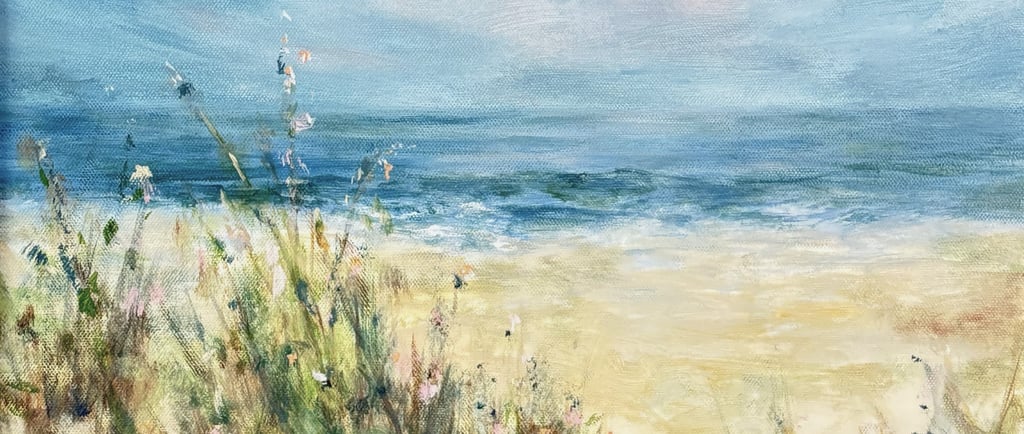
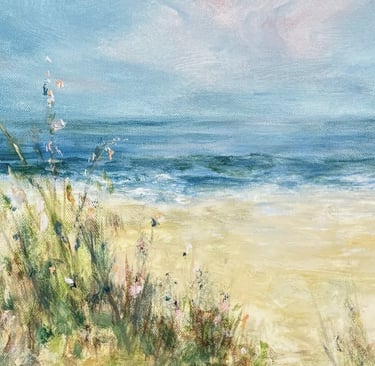
The British coastline holds a unique quality. It’s not just the dramatic cliffs or the ever-changing light; it’s the sheer, raw energy of the sea that calls to us. As a contemporary British landscape artist, capturing this energy is a constant delightful challenge of my art practice.
This is a deeper dive into how I transform the inspiration of the coast into an expressive painting, detailing the journey from fieldwork to the final brushstroke.
Phase One
My work always begins with an act of immersion. Before any paint touches the canvas, I need to feel the location. I few times a year travel to rugged shores the South Downs, the Cornish Coast or the wild beaches by the North Sea. Sometimes I take a small kit of oil paints, sometimes inks and charcoal and sometimes I travel light with a small sketchbook.
This stage is less about realistic depiction and more about emotional capture. I make quick, sketches and colour studies, noting the specific light quality, the movement of the waves or the feel of the weather.
Tip for Collectors: When you see a seascape that resonates, you are often connecting with the artist’s memory and response to that exact moment. Look for the underlying movement and the artist's unique mark-making, not just a photographic likeness.
Phase 2:
My brain needs time to percolate and assimilate the ideas and images that arise from working outdoors.
Back in the studio, the sketches become my anchor. I use my sketches as a reference image and then infuse the work with the story, asking myself what was I most interested in and that becomes the focus and where the real drama begins. Painting the sea is complex because it moves and changes constantly.
My contemporary seascapes demand a response to the movement, sometimes with bold mark making and other times its smooth almost glass like expanses of still water.
Oil painting techniques require use of different tools to make different marks from traditional brushes and a palette knife to paper towels and a kitchen spatula.
Phase 3
My expressive but calm style relies heavily on movement, light an balance. I rely on a mixture of thin washes and thick confident layers of paint. This technique sometimes creates a watery like feel replicating the waves and sometimes creates a tangible surface that catches the light and mimics the physicality of the landscape.
The Underpainting: I start block in areas of colour quickly and loosely, establishing the composition and light source.
Layering and Mark-Making: This is where the energy comes in. I apply paint with rapid, decisive strokes. The texture of the paint itself becomes part of the storytelling. Scraped lines suggest wind-blown grass; thick white paint become the foam of breaking waves, thin washes become the tumbling waves.
Finding the Focus: Finally, I return to the key point— the light or the crash of the wave, a specific cove, or the horizon line—to bring the painting into balance and focus and ensure the composition guides the viewer’s eye through the scene.
This interplay between energetic mark making and refinement is the key to creating a truly powerful contemporary British landscape.
Conclusion: Bringing the Outside In
The process of painting a seascape is without doubt a conversation with nature—a challenge to translate a sensory experience into a visual one. Every painting on my site, from the small, affordable art pieces to the large gallery works, carries the history of that conversation.
If you are looking to bring a piece of this wild beauty into your home, I invite you to explore the latest works in my seascapes and landscapes collections.